TINY GALLERY
- the smallest gallery in town -

Tiny Gallery initiative
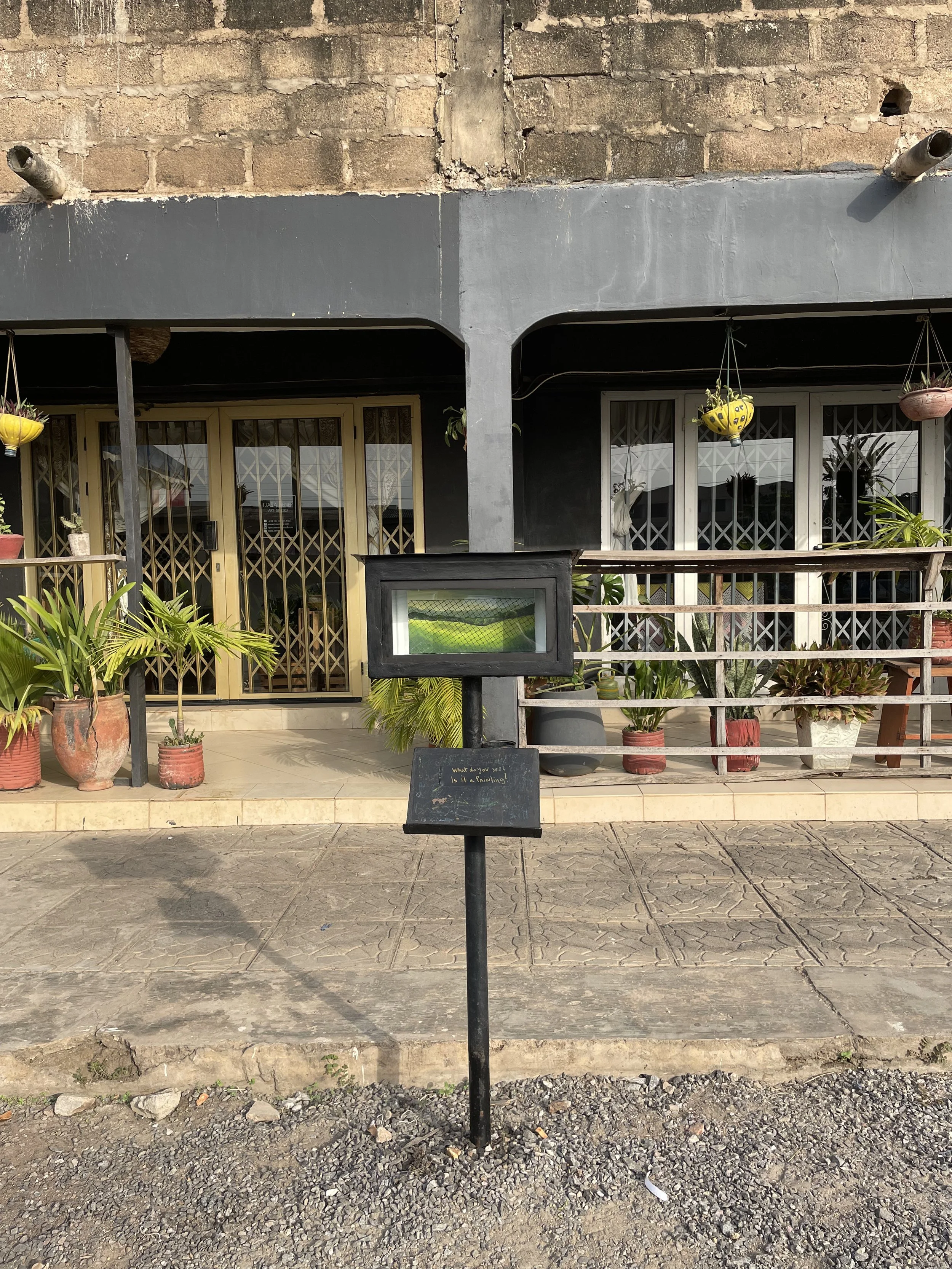
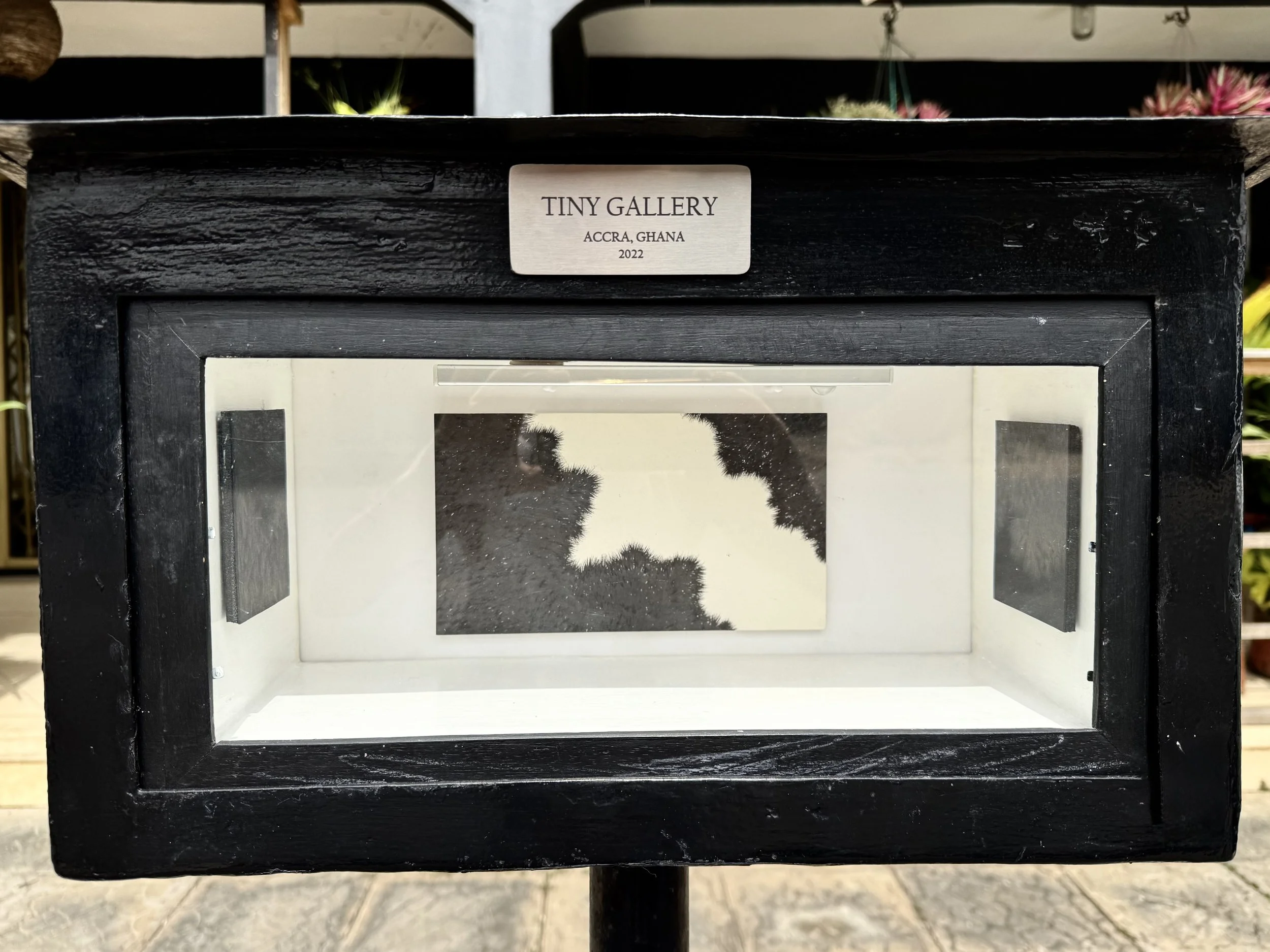
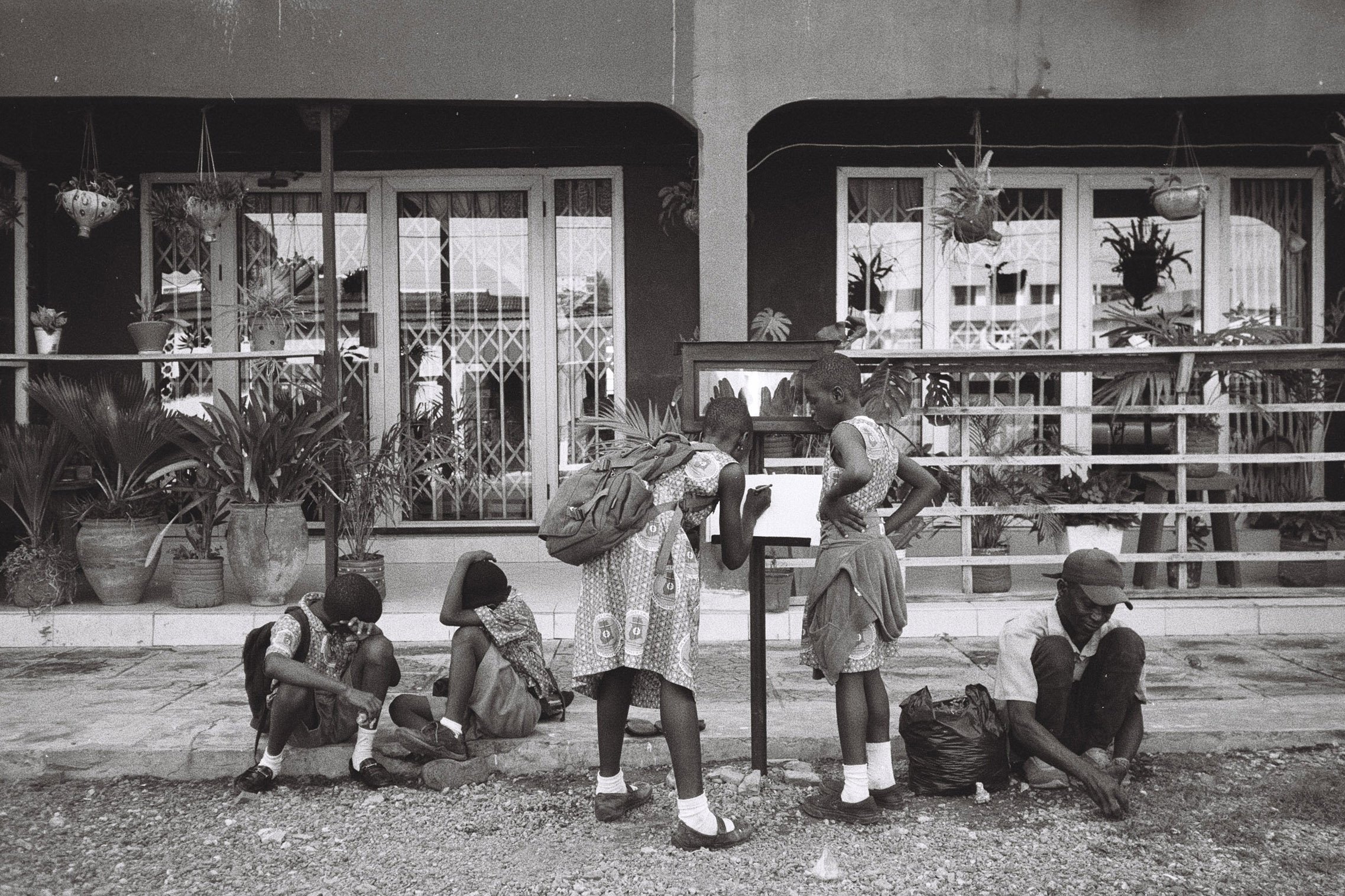
The Tiny Gallery is an installation that fulfills the purposes of a usual gallery in miniature form. The project was conceived as an alternative to a typical gallery space after Open House Studio, a gallery serving Accra's emerging artists, was taken away at the end of 2021. Our tiny exhibition space encourages artists to think and show their work in new, alternative ways, and its unique location engages and provokes an entirely new community who would not otherwise have access to the contemporary art scene. Located on the side of a dusty road in a working class neighborhood of Accra, Ghana, The Tiny Gallery serves an educational purpose while making art visible and accessible. It is an important space especially for the youngest generation in our community, having become a reliable source of inspiration and entertainment to the school children who visit regularly on their way to and from classes. The interaction of our community members with The Tiny Gallery creates its own beautiful work of art, reminding everyone that art should not exist only in the domain of a select few or of high society, but instead ought to be available to every passerby.
The Tiny Gallery aims to serve as a platform for a wider circle of people by establishing an international cooperation and installing Tiny Galleries in ordinary locations around the world.
Tiny Gallery has a sister gallery located at the Park Ravne, Slovenia. Since July 2025
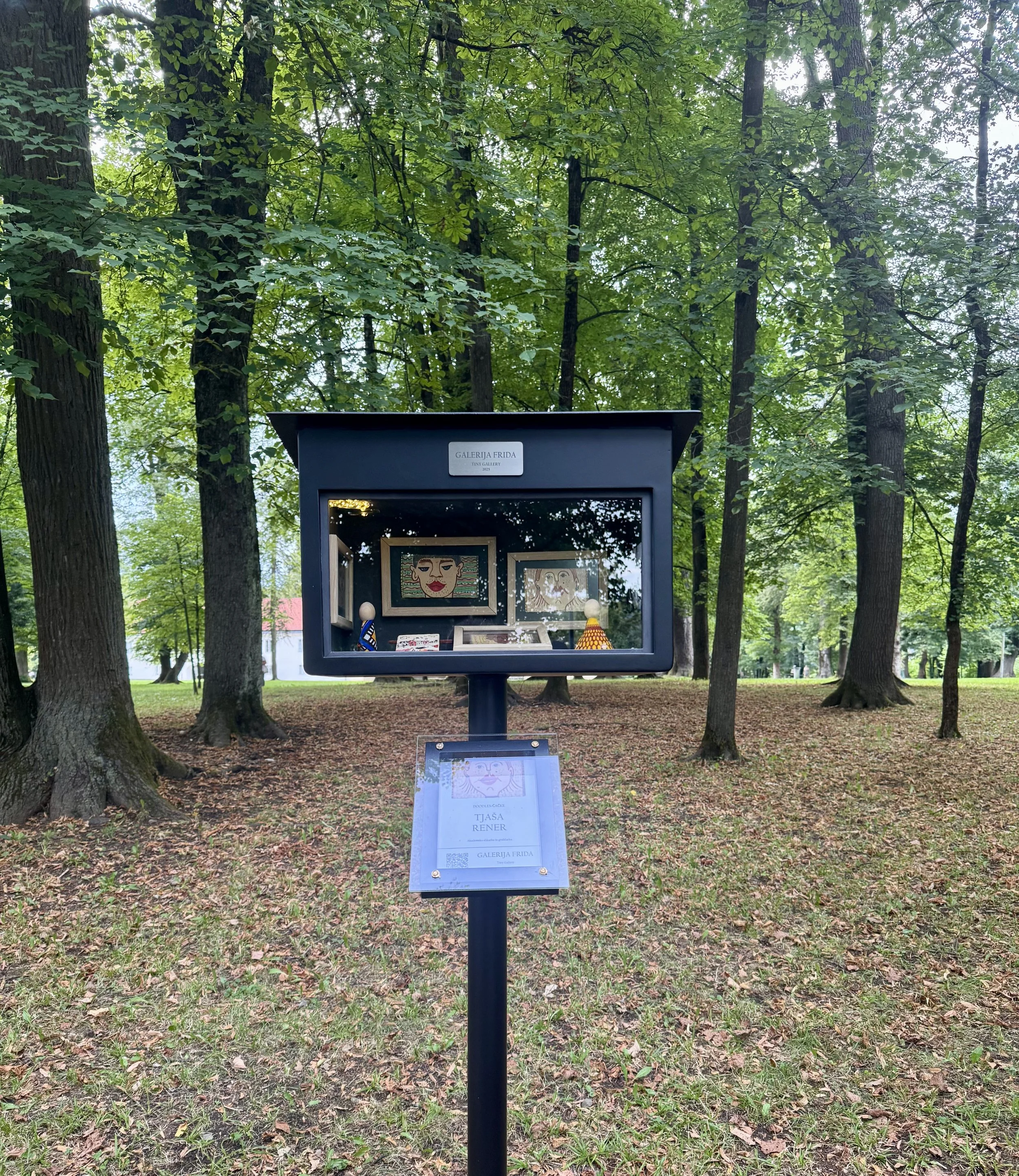
Gallery Frida, Park Ravne, Ravne na Koroškem
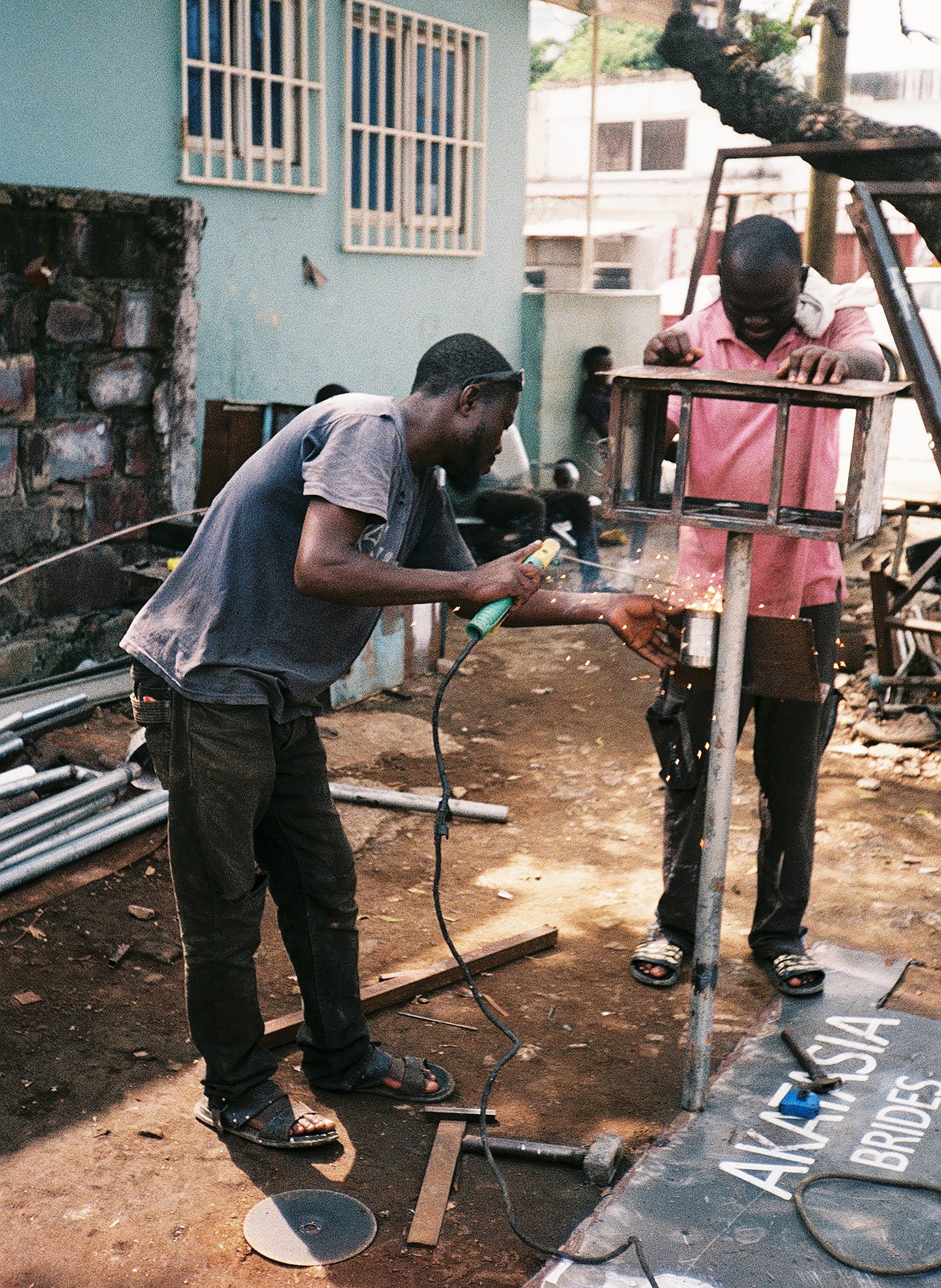
making of Tiny Gallery, Accra
Life of Tiny Gallery- video

Tiny Gallery Accra
Type of art: installation (community/education)
Year: 2022- ongoing
Location: Accra, Ghana
HOSTED EXHIBITIONS:
January 2022
Artist: Tjasa Rener
Medium: ink on cardboard and 3D set up
Exhibition Title: Doodle-a door open to the unconscious

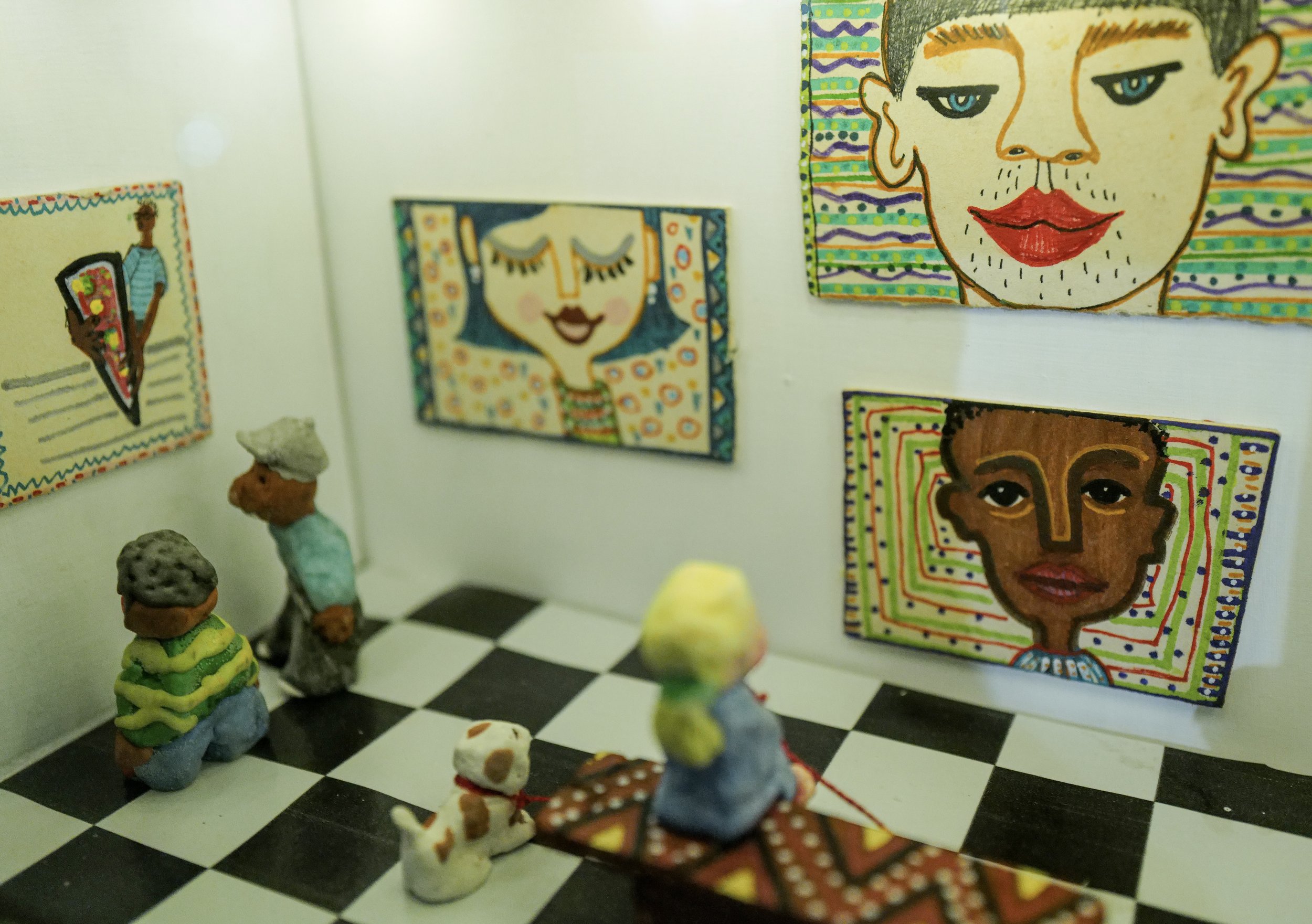
February 2022
Artists: Studenst from Bethany Methosist Basic School (age 7/ 10), reflections on our workshops
Medium: markers on cardboard
Title: Sharing love and kindness

April 2022
Artsist: Rania Odaymat
Medium: recycling material
Exhibition title: Does your work makes Accra better?

May 2022
Artsist: Moses Ajay
Medium: aluminium cans
Title: Portraits of Kayayei- the woman head porters
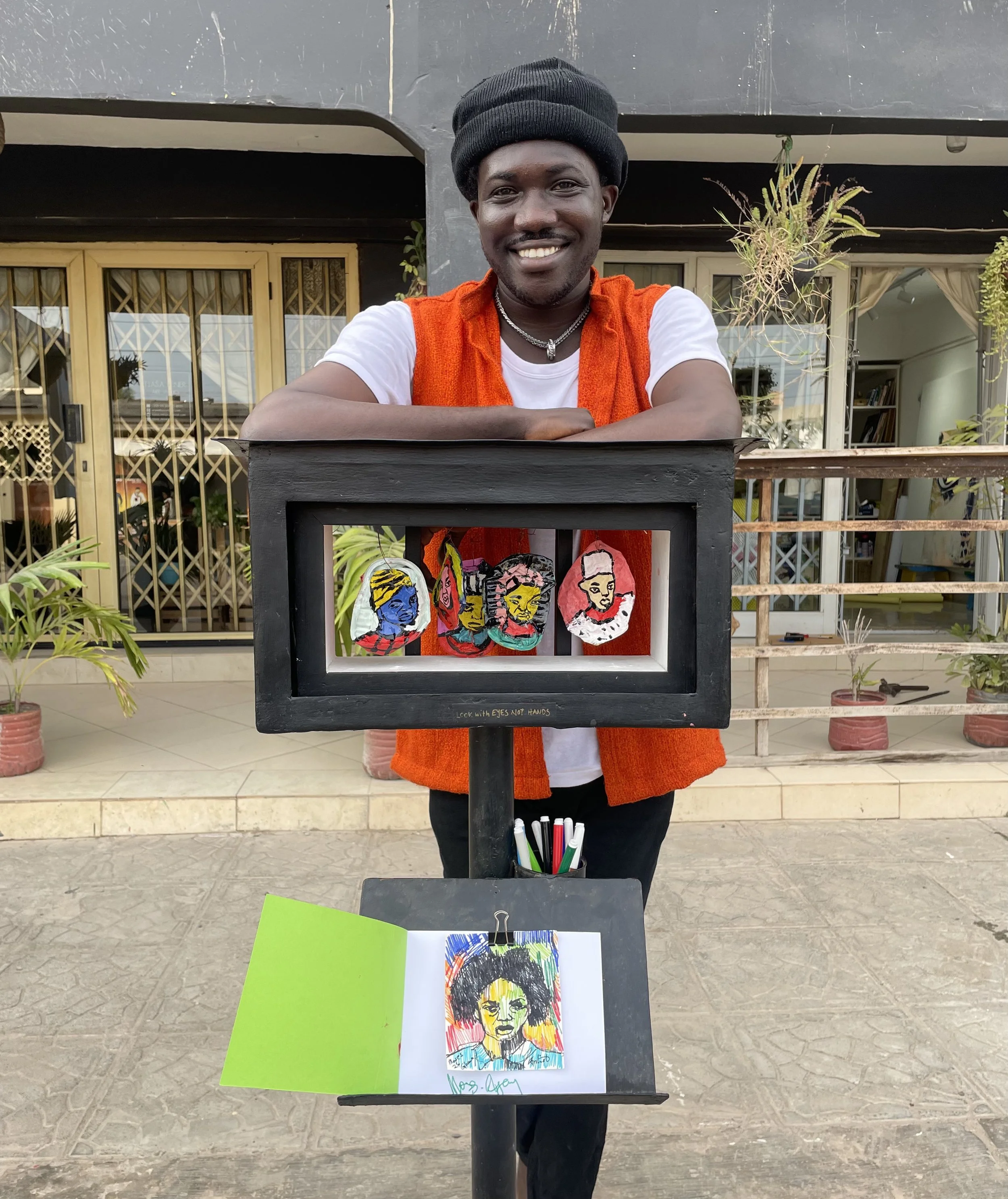
July 2022
Artsit: Hanson Akatti
Medium: printed illustrations
Title: African Heroes
December 2022
Artist: The Slum Studio
Medium: Ink on Paper
Title: Kumfo Domfo
January 2023
Artist: Ann Laure Gueret
Medium: photography
Title: Akwaaba Songs
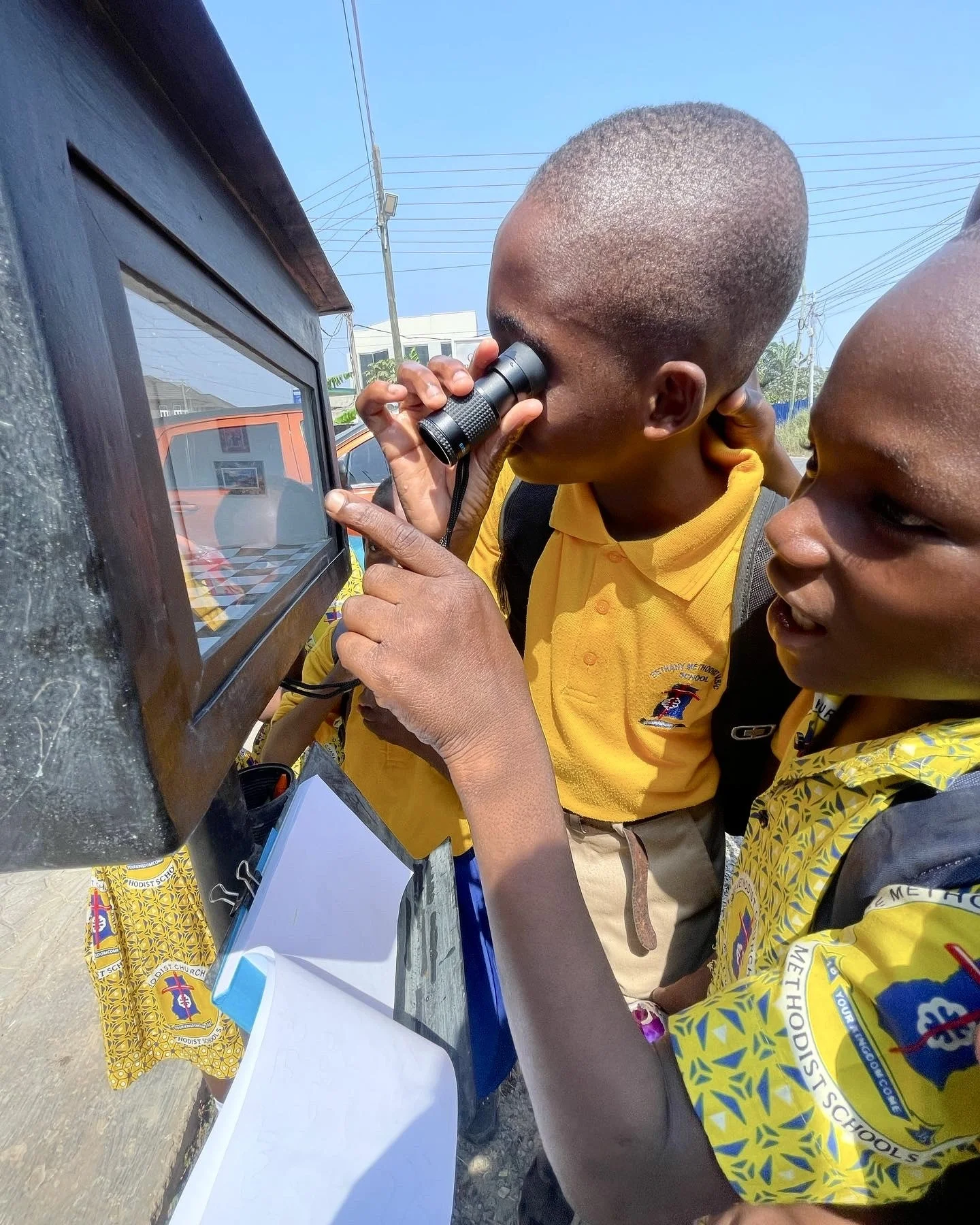
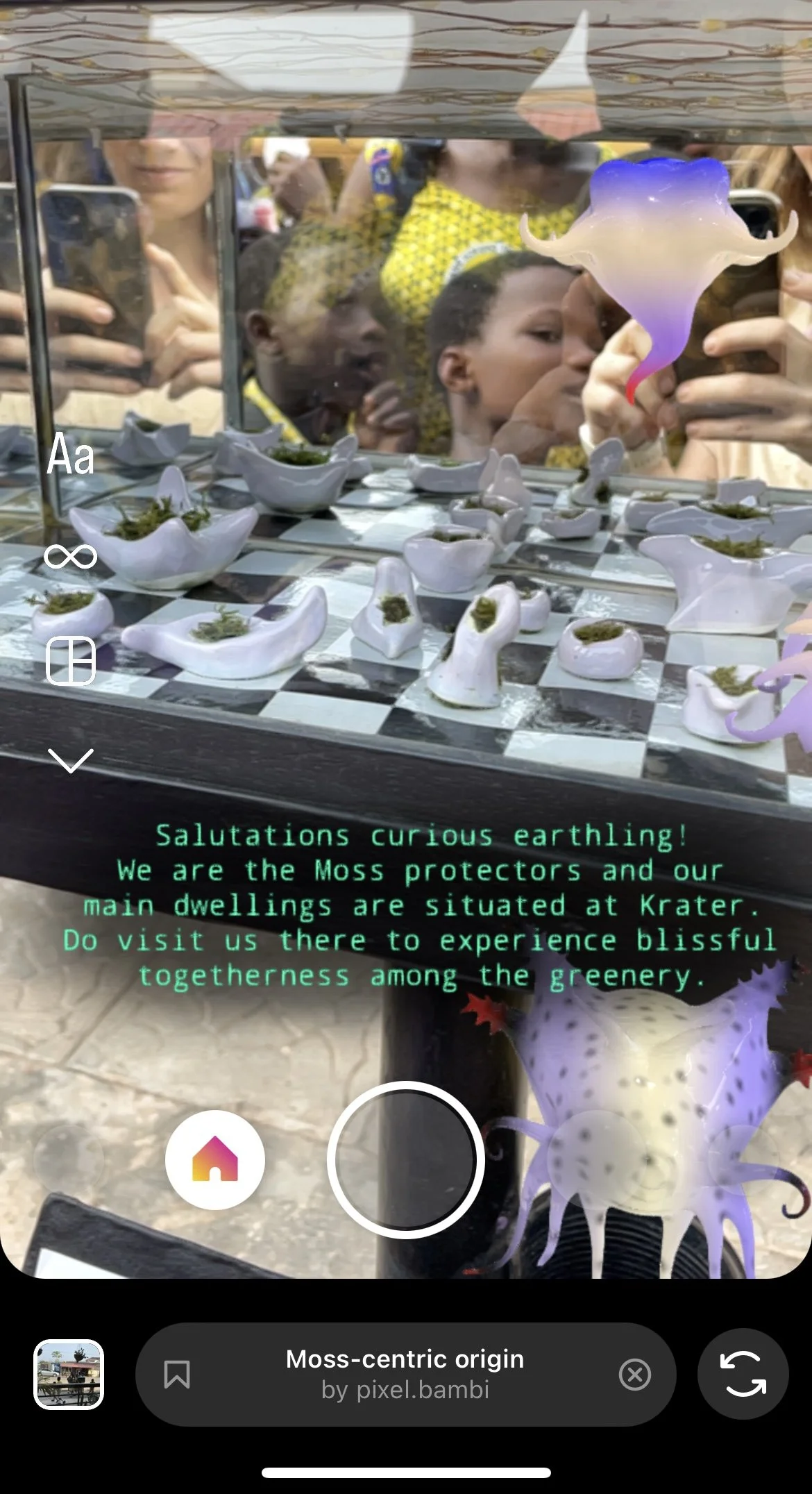
March 2024
Artist: Beti Frim & Ines Sekač
Medium: multiemdia installation
Title: From The Moss-centric Era
April 2024
Artist: Manca Žitnik
Medium: painting
Title: Inside/Outside
April 2024
Artist: Mori Sikora
Medium: fabric installation
Title: Ephemeral Pond
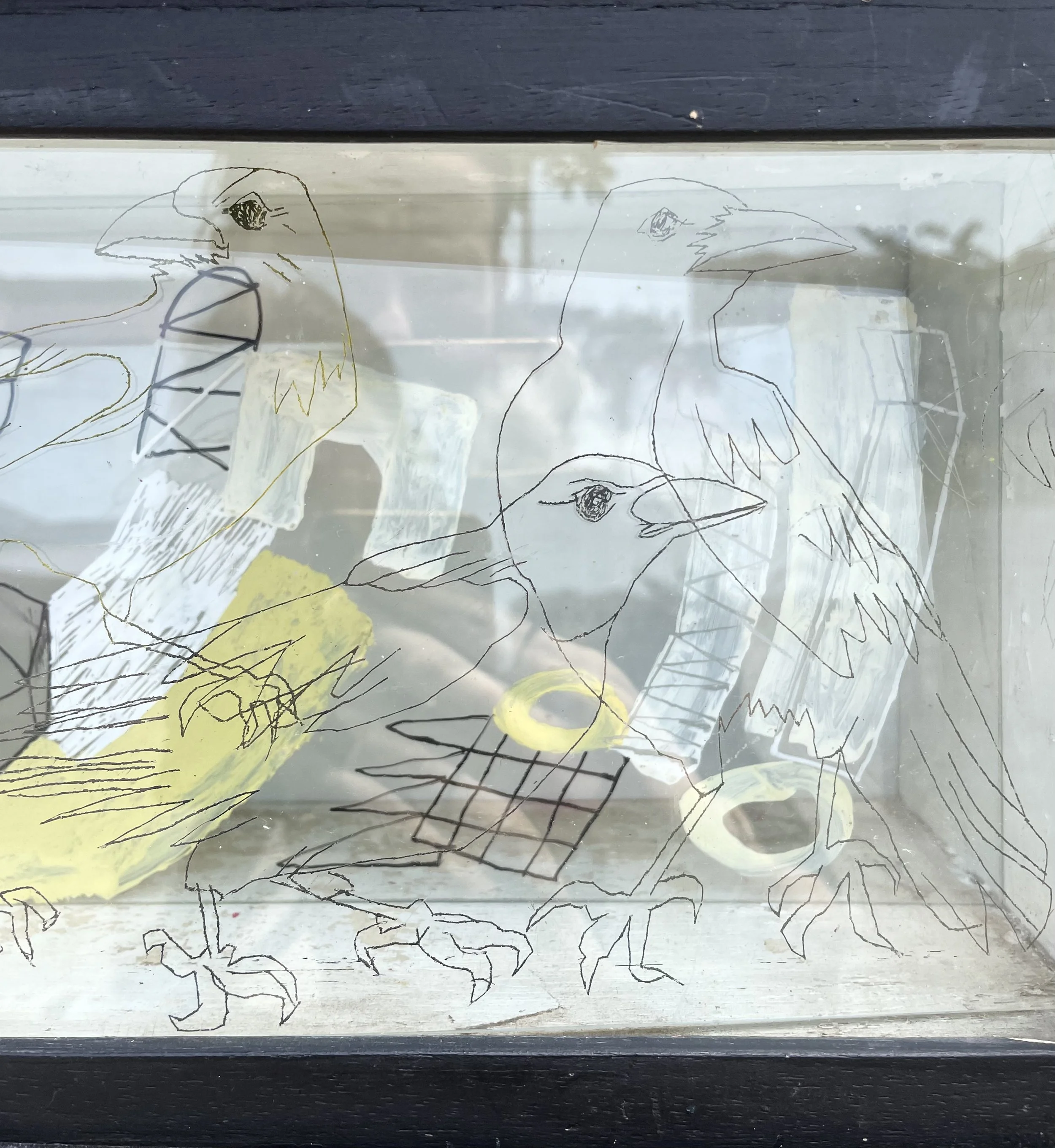
May 2024
Artist: Nika Rupnik
Medium: plexi glass, marker, acrylic
Title: Inhabited
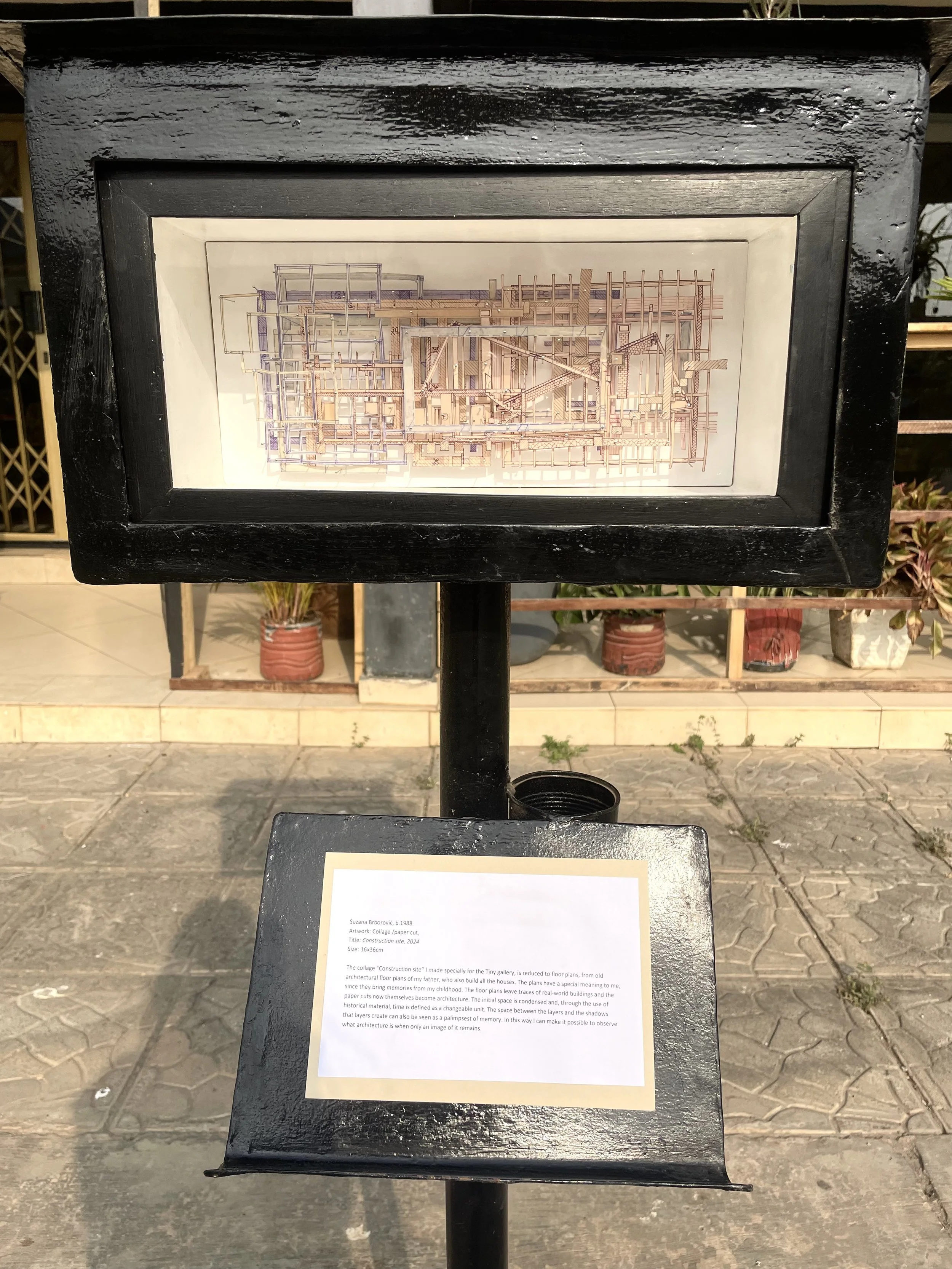
January 2025
Artist: Suzana Brborović
Medium: paper cut
Title: Cunstruction site
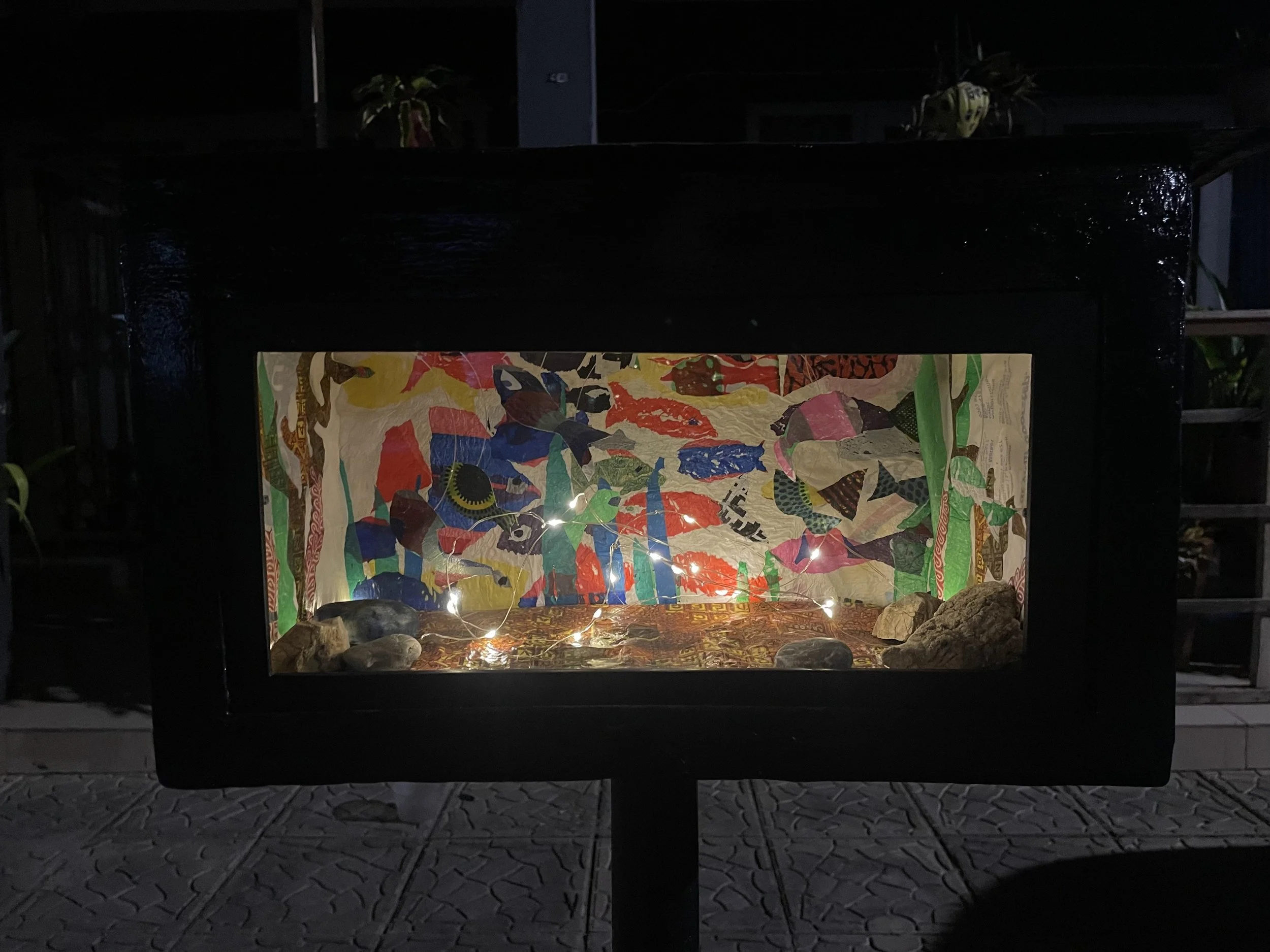
March 2025
Artist: Sena Ahadji
Medium: recycling plastic bags
Title: Plastic Fish Aquarium
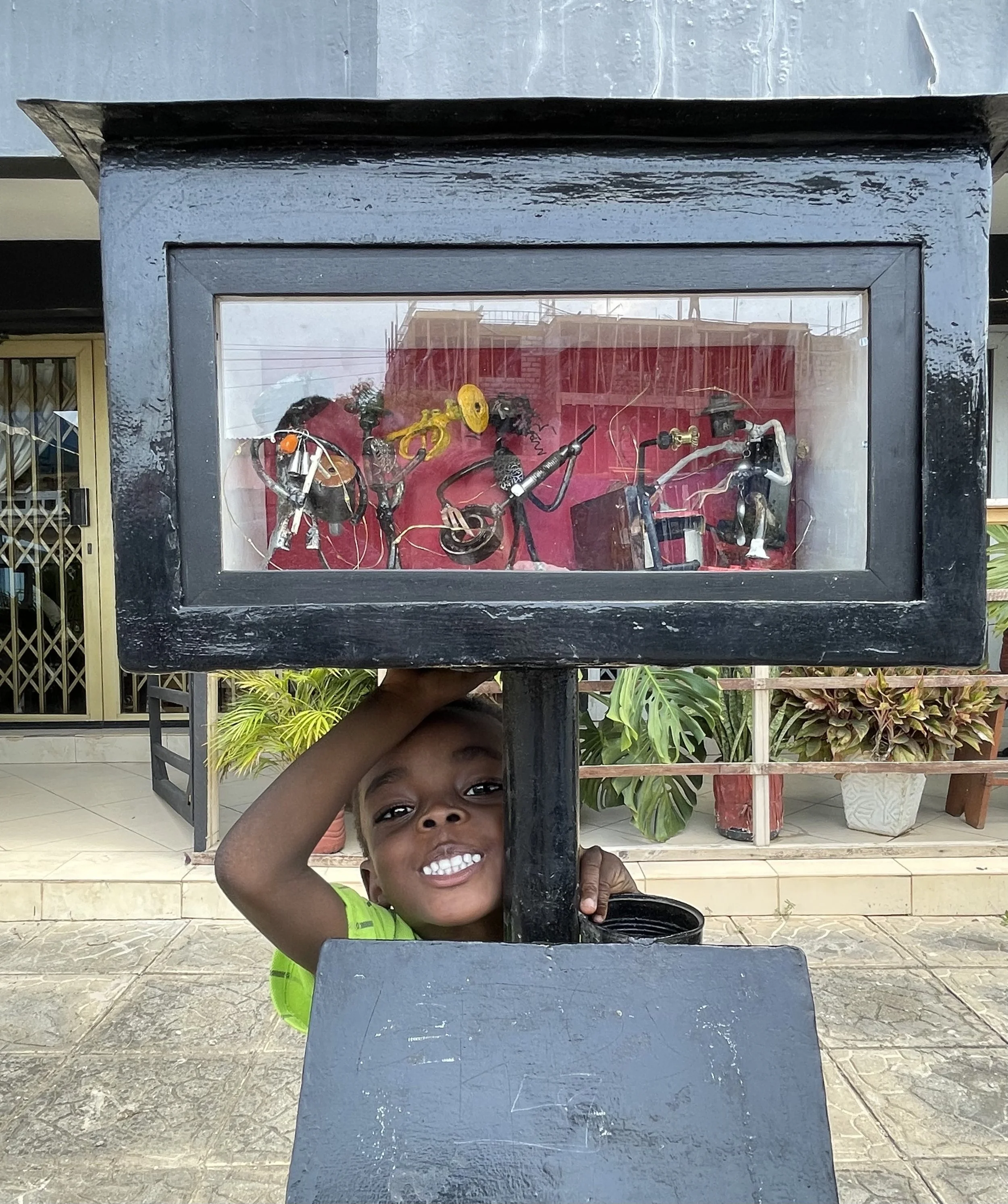
April 2025
Artist: Nana Anof
Medium: mini metals
Title: Soul Food
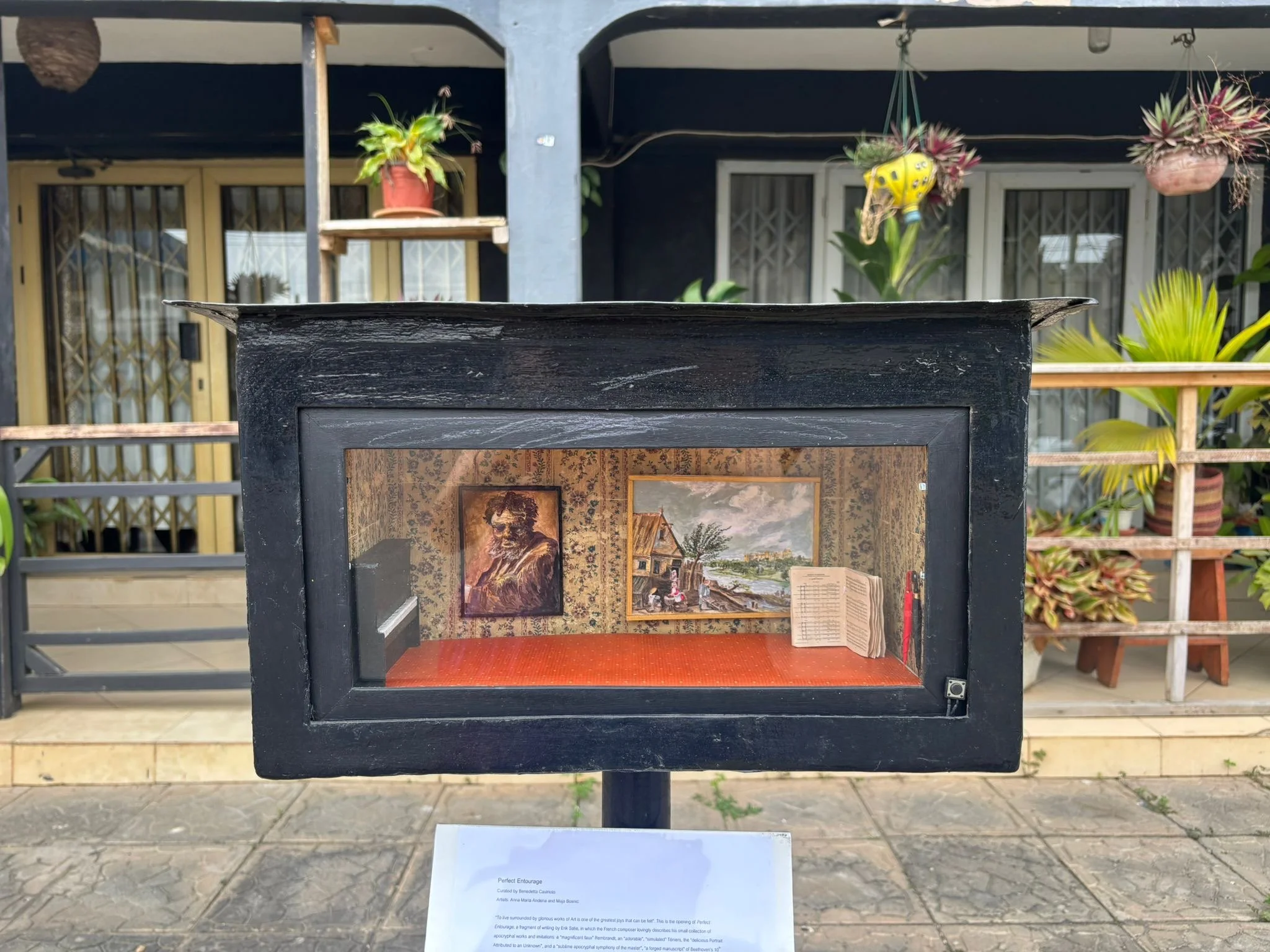
September 2025
Artist: Maja Bosnić (music), Anna Maria Andena (art) and Benedetta Castrioto (curator)
Medium: site specific musical installation
Title: Perfect Entourage
January 2026
Artist: Tina Konec
Medium: ink and pencil on paper
Title: Day and Night and Night and Day
March 2026
Artist: Urška Boljkovac
Medium: installation
Title: Swimmers
April 2026
Artist: Nyugen E.Smith
Medium: found objects
Title: Bâ momo bâô pe bâ he
(“An Old Broom Sweeps Cleaner Than a New Broom”)
May 2026
Artist: Katja Goljat
Medium: photo installation
Title: The Test of Time
Tiny Gallery at Fondation Cartier pour l’art contemporain, Paris
October, 2026
For Foundation Cartier, Relocation / Dislocation examines what happens when a deeply site-specific, community-rooted initiative is relocated into an international museum context. The installation includes a full-scale reconstruction of the Tiny Gallery structure presenting What We Leave Behind — a collaborative installation developed with children from regular workshops in Accra, exploring sustainability through reused materials.
The presentation also features a large-scale archival photograph of Tiny Gallery in its original setting and five display boxes containing works by artists previously exhibited in Accra (Maja Stamenković, Nyugen E. Smith, Ines Sekač & Beti Frim, Suzana Brborović, and Moses Adjei). QR codes provide access to documentation of the project’s ongoing community engagement.
Bridging Accra and Paris, the installation reflects on how small-scale cultural initiatives create platforms for education, collaboration, and transnational dialogue.
Participation at 35th Biennale of Graphic Art, Ljubljana, 2023
Type of art: installation (community/education)
Year: 2023/ 2024
(15.9. 2023- 14.1.2024)
Location: Ljubljana, Slovenia


14.9- 13.10. Ines Sekač in Beti Frim
14.10-13.11. Collective Kvadratni Meter

In the project Construction site, the collective m2 is addressing the pressing issue of gentrification and the erasure of public spaces. By filling the tiny gallery space with debris and dirt gathered from a construction site that was once autonomous zone Rog, which has now become a luxurious space, they point out the consequences of elite construction projects with which municipality is erasing public, green and autonomous spaces and is forever changing the cityscape of Ljubljana.
Collective Kvadratni Meter
14.11-11.12. Mori Sikora
12.12-14.1. Manca Žitnik

As part of the 35th Ljubljana Biennale of Graphic Arts, the work of Manca Žitnik explores features and recent add-ons or plug-ins to architecture that present a passive but constraining character on various bodies. For Manca, there is a sense of deprivation that comes from privatising public spaces in the name of security. Her imagery renders an aspective view of the urban landscape, destabilising the established norms by collapsing it on itself and revealing the degree of alienation in the situation created in these cities with various interesting props and constructions.
In the Tiny Gallery, Manca continues this exploration, this time on canvas. Emphasizing elements of the landscape, she contrasts them with prohibitions and surveillance, which remain omnipresent, even if often overlooked aspects of everyday life, dictating how we move (or don’t move).